Housing Research & Analysis

State ERA Program Dashboards
Several states have launched information dashboards to track and communicate Emergency Rental Assistance (ERA) program progress, including the number of applications received and total funds distributed. See live or regular updates on the State ERA Program Dashboards page.
NCSHA’s Analysis of the Biden Administration’s FY 2022 Budget Request
This resource is NCSHA’s analysis of the Biden Administration’s Fiscal Year 2022 Budget Request. The $6 trillion budget outlines the Biden’s Administration’s fiscal priorities, including for HUD and USDA housing programs.

Biden’s FY 2022 Budget Request
On May 28, 2021, the Biden Administration submitted to Congress the President’s Budget for Fiscal Year 2022. The budget request totals $6 trillion and outlines the Biden’s Administration’s fiscal priorities, including for HUD and USDA housing programs.

Opportunity Zones | Articles and Background Materials
Access recent Opportunity Zones articles curated by NCSHA staff.
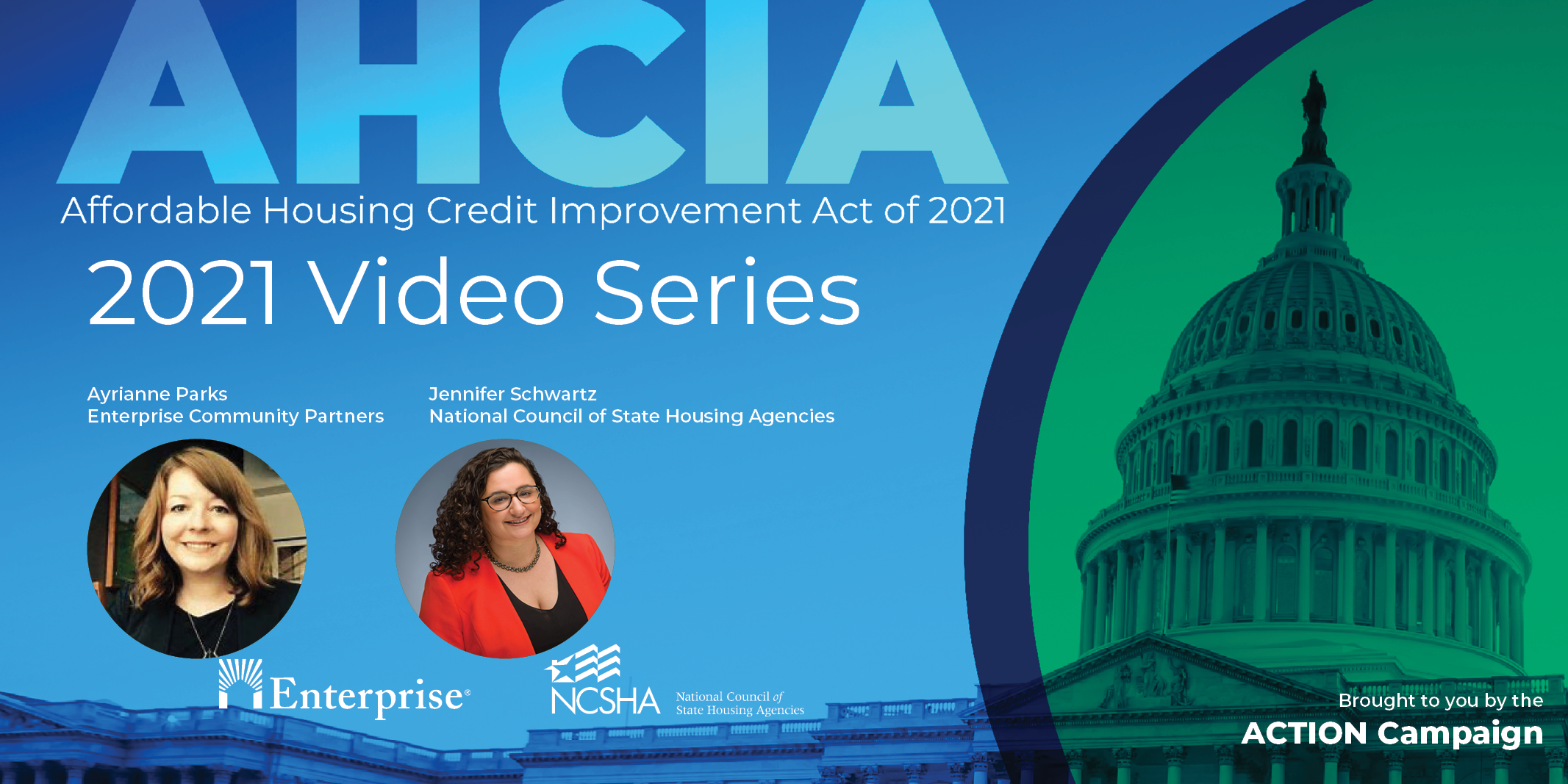
Affordable Housing Credit Improvement Act of 2021: Video Series
In this video series, Ayrianne Parks, Senior Director of Public Policy at Enterprise, and Jennifer Schwartz, Director of Tax and Housing Advocacy at NCSHA, provide an overview of each of the provisions in the Affordable Housing Credit Improvement Act (AHCIA) of 2021 (S. 1136 and H.R. 2573).

Terner Center Report: The Complexity of Financing Low-Income Housing Tax Credit Housing in the United States
This report by the Terner Center for Housing Innovation at U.C. Berkeley examines the complexities associated with using multiple subsidy financing sources in Housing Credit properties and approaches to streamlining the capital stack. It is part of the Terner Center’s Cost of Building Housing Research Series.
NCSHA-Commissioned Novogradac Report: Analyzing the Impact of Lowering the 50% Test for 4% Tax-Exempt Bond-Financed Properties
On behalf of NCSHA, Novogradac conducted this report on the results of lowering the 50 percent financed-by threshold for 4 percent Housing Credit properties, analyzing the outcomes related to bond cap and multifamily production levels if the financed-by threshold were to be lowered to 40 percent, 33 percent, or 25 percent. This report updates a previous report on the financed-by threshold Novogradac conducted for NCSHA in 2020. The analysis is updated to account for the minimum 4 percent Housing Credit rate established in 2020 year-end legislation and updated Congressional Budget Office inflation projections.

GAO Report: “COVID-19 Housing Protections: Moratoriums Have Helped Limit Evictions But Further Outreach Is Needed”
This report by the U.S. Government Accountability Office examines eviction moratoria policies at the federal, state, and local level and data on eviction filings, rental payments, and mortgage forbearance to determine the impact of eviction moratoria on households facing housing instability during the COVID-19 pandemic.
National Low Income Housing Coalition Report: “The Gap: A Shortage of Affordable Homes March 2021”
This report, published annually by the National Low Income Housing Coalition, examines the shortage of affordable homes available to extremely low-income renters.