NCSHA Data and Research
Analysis of Models for Assessing Rental Assistance Need
In this report prepared for NCSHA, Abt Associates presents an analysis of nine estimates of rental debt that were published at different times during the pandemic and compares those estimates to the congressional appropriations and allocations for the Emergency Rental Assistance Programs, ERA1 and ERA2.
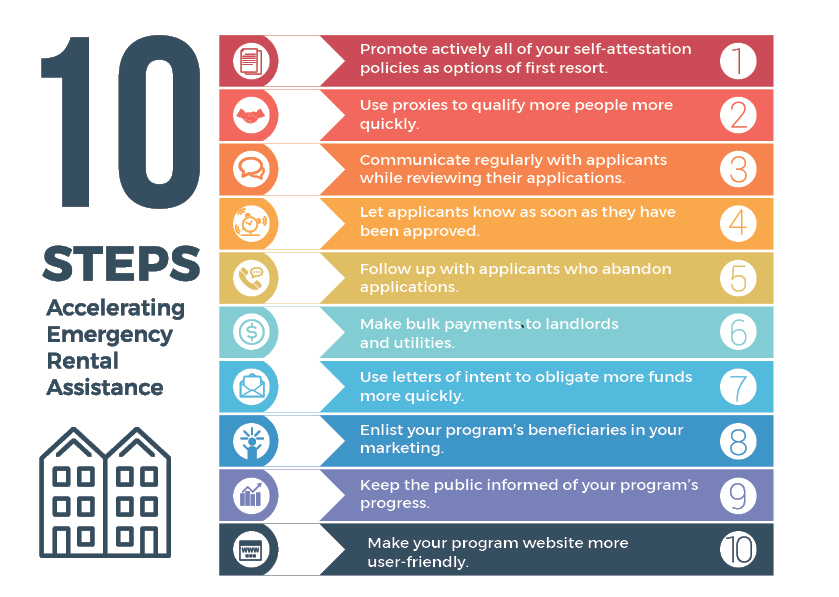
Ten Steps for Accelerating Emergency Rental Assistance
State and local administrators of the federal Emergency Rental Assistance Program can get more relief to more renters more quickly by adopting proven practices. NCSHA encourages all ERAP grantees to adopt the practices compiled in this document.
Accelerating the Utilization of Emergency Rental Assistance: NCSHA Recommendations
This paper consolidates the various recommendations NCSHA has made to the Administration on how it could modify its guidance to better facilitate rapid deployment of Emergency Rental Assistance program funds to eligible households and their landlords and utility providers.

State ERA Program Dashboards
Several states have launched information dashboards to track and communicate Emergency Rental Assistance (ERA) program progress, including the number of applications received and total funds distributed. See live or regular updates on the State ERA Program Dashboards page.
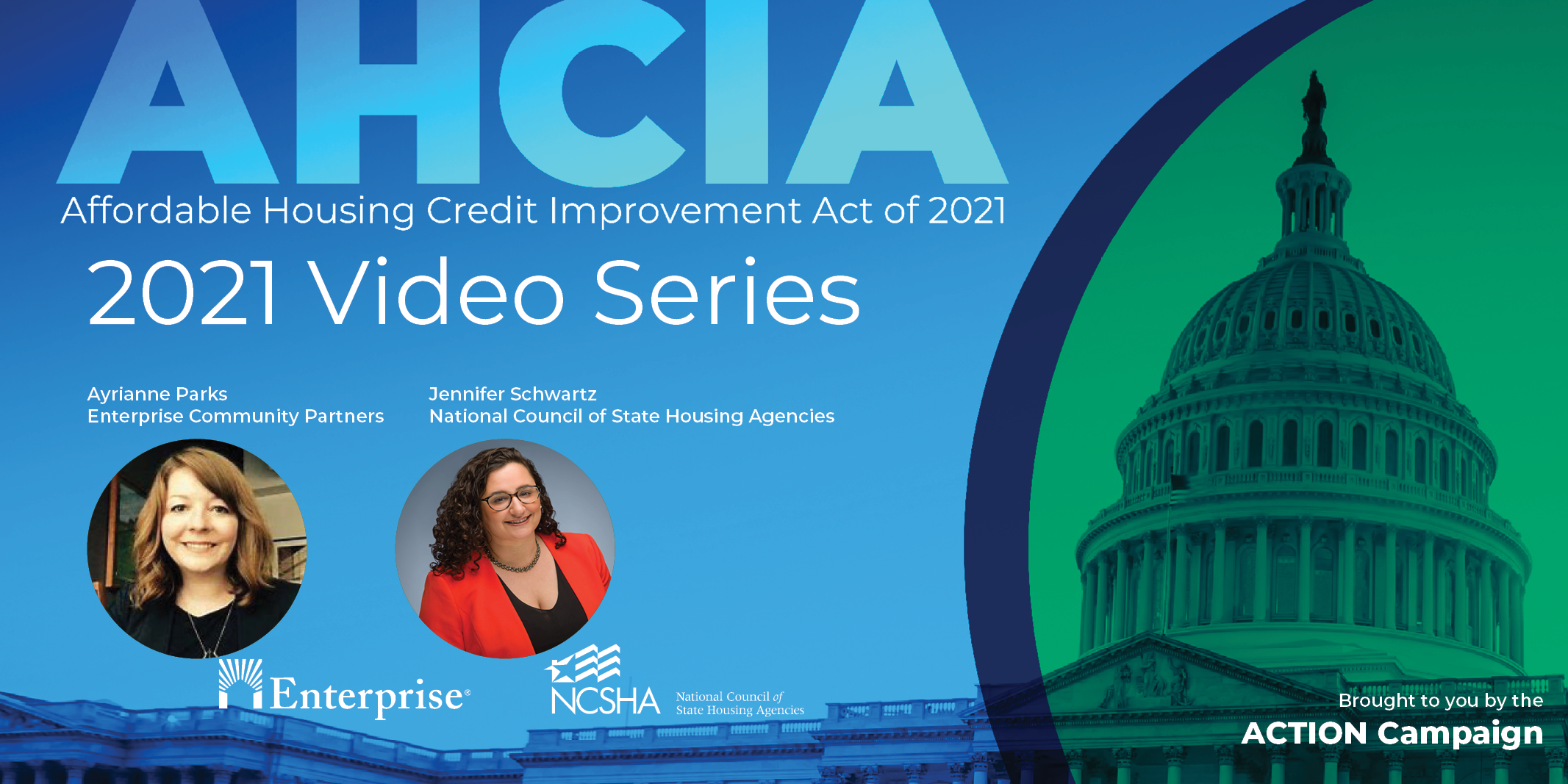
Affordable Housing Credit Improvement Act of 2021: Video Series
In this video series, Ayrianne Parks, Senior Director of Public Policy at Enterprise, and Jennifer Schwartz, Director of Tax and Housing Advocacy at NCSHA, provide an overview of each of the provisions in the Affordable Housing Credit Improvement Act (AHCIA) of 2021 (S. 1136 and H.R. 2573).
NCSHA-Commissioned Novogradac Report: Analyzing the Impact of Lowering the 50% Test for 4% Tax-Exempt Bond-Financed Properties
On behalf of NCSHA, Novogradac conducted this report on the results of lowering the 50 percent financed-by threshold for 4 percent Housing Credit properties, analyzing the outcomes related to bond cap and multifamily production levels if the financed-by threshold were to be lowered to 40 percent, 33 percent, or 25 percent. This report updates a previous report on the financed-by threshold Novogradac conducted for NCSHA in 2020. The analysis is updated to account for the minimum 4 percent Housing Credit rate established in 2020 year-end legislation and updated Congressional Budget Office inflation projections.
Administration of the Federal Emergency Rental Assistance Program: Considerations for State Agencies
To help states design Emergency Rental Assistance programs and deploy the available funds, NCSHA worked with Abt Associates to develop this guidance document. This guidance is intended to help states...
Analysis of Current and Expected Rental Shortfall and Potential Eviction Filings in the U.S.
This report, produced by STOUT, estimates roughly 10 – 14 million renter households — home to 23 – 34 million renters — were behind on their rent by a total of roughly $12 – $17 billion as of September 14, 2020.

State HFA Emergency Housing Assistance 2020 Programs
This directory shows critical components of state HFA emergency rental and mortgage assistance programs established in response to the COVID-19 pandemic. The linked presentation provides analysis, early takeaways, and additional resources.