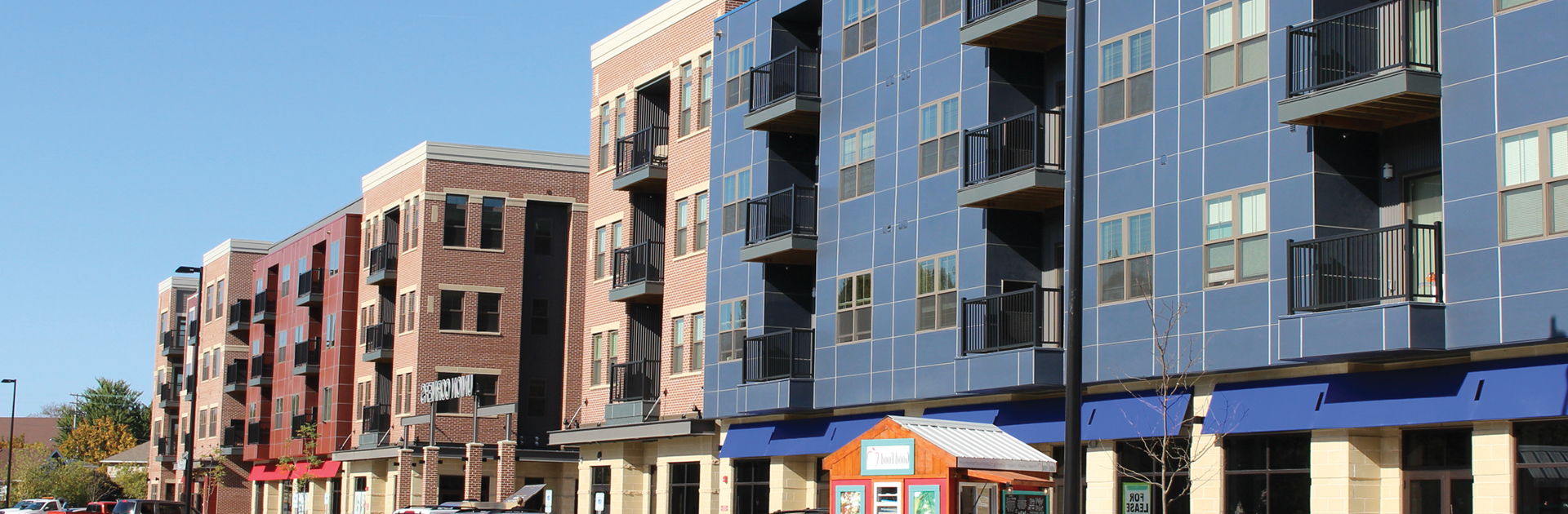

State and local governments sell tax-exempt Housing Bonds, commonly known as Mortgage Revenue Bonds (MRBs) and Multifamily Housing Bonds, and use the proceeds to finance low-cost mortgages for lower-income first-time homebuyers or the production of apartments at rents affordable to lower-income families. MRBs have made first-time homeownership possible for nearly 3.5 million lower-income families, historically 100,000 every year. Multifamily Housing Bonds have provided financing to produce almost 1.4 million apartments affordable to lower-income families.
Each state’s annual issuance of Housing Bonds is capped based on population, with a minimum authority amount for small states. MRB mortgages are restricted to first-time homebuyers who earn no more than the area median income (AMI). Larger families can earn up to 115 percent of AMI. In 2022, state HFAs provided MRB mortgages to families with an average income of $59,465, just 80 percent of the national median income. The price of a home purchased with an MRB mortgage is limited to 90 percent of the average area purchase price. MRB loans can also be used to help working families finance critical home repairs or energy efficiency upgrades.
HFAs also use their MRB authority to issue Mortgage Credit Certificates (MCCs), which provide a nonrefundable federal income tax credit for part of the mortgage interest qualified homebuyers pay each year. State HFAs have used MCCs to provide critical tax relief to 398,000 families.
Multifamily housing bond developments must set aside at least 40 percent of their apartments for families with incomes of 60 percent of AMI or less, or 20 percent for families with incomes of 50 percent of AMI or less. In 2022 alone, HFAs financed the development of more than 59,000 affordable apartments through bonds.
Maintaining and strengthening the Housing Bond program is one of NCSHA’s Legislative Priorities.
The Affordable Housing Bond Enhancement Act
On June 6, 2023, Senators Catherine Cortez Masto (D-NV) and Bill Cassidy (R-LA) introduced the Affordable Housing Bond Enhancement Act (S.1805). The bill would implement several simple but impactful changes to MRBs and MCCs that will expand the supply of affordable homes and improve access to homeownership for low and moderate-income home buyers.
Some of the changes in the bill include:
- Increasing the MRB home improvement loan limit
- Allowing MRBs to be used for refinancing loans
- Providing HFAs additional flexibility in how they utilize housing bond authority
- Simplifying how a borrower’s MCC benefit is calculated
- Reducing the time period for the MRB and MCC recapture tax from nine years to five
- Extending the amount of time HFAs can use converted MCC authority from two years to four;
- Allowing HFAs to reconvert MCC authority back into MRBs two years after the conversion, rather than one.
For more information on the Affordable Housing Bond Enhancement Act, see NCSHA’s section-by-section analysis, which describes each of the provisions in more detail, and NCSHA’s one-page summary of the bill.
Contacts:
- To find local housing assistance, please contact your state’s Housing Finance Agency (HFA).
- To learn more about NCSHA’s advocacy work in this area or to attend a related education event, complete the general inquiry form.
- Members of the media, please contact Lisa Bowman, Director of Marketing and Communications, at lbowman@ncsha.org.